
Comparison
Epoxy vs Polyaspartic Garage Floors in Coastal Carolina
Updated October 2026 · Clean Floor Coatings, Little River, SC
Quick answer
At the coast, the strongest garage floors use both: an epoxy base coat that bonds into ground concrete and blocks moisture coming up through the slab, and a polyaspartic top coat that stays clear in the sun. Epoxy alone is tough but tends to yellow in UV light. Polyaspartic alone cures fast and stays UV stable, but it is not built to hold back slab moisture. Clean Floor Coatings uses a moisture vapor barrier epoxy base, flake and a polyaspartic top coat.
- Veteran and family owned
- Serving Myrtle Beach since 2019
- One all inclusive price
Side by side
| Epoxy | Polyaspartic | |
|---|---|---|
| Sun and UV | Tends to amber or yellow over time | UV stable, stays clear |
| Moisture from the slab | Moisture barrier versions block it | Not designed as a moisture barrier |
| Bond to concrete | Excellent on ground concrete | Good, best over a base coat |
| Cure time | Slower | Fast |
| Install window | More working time | Short, needs an experienced crew |
| Best job | Base coat | Top coat |
Why the coast changes the answer
Two things make the Grand Strand hard on a garage floor: sun and water. The door is open half the day with sunlight pouring onto the front of the slab, and plain epoxy exposed to that light ambers. Meanwhile the slab sits on sandy, wet ground, and moisture rising through it pushes off coatings that were not built for it.
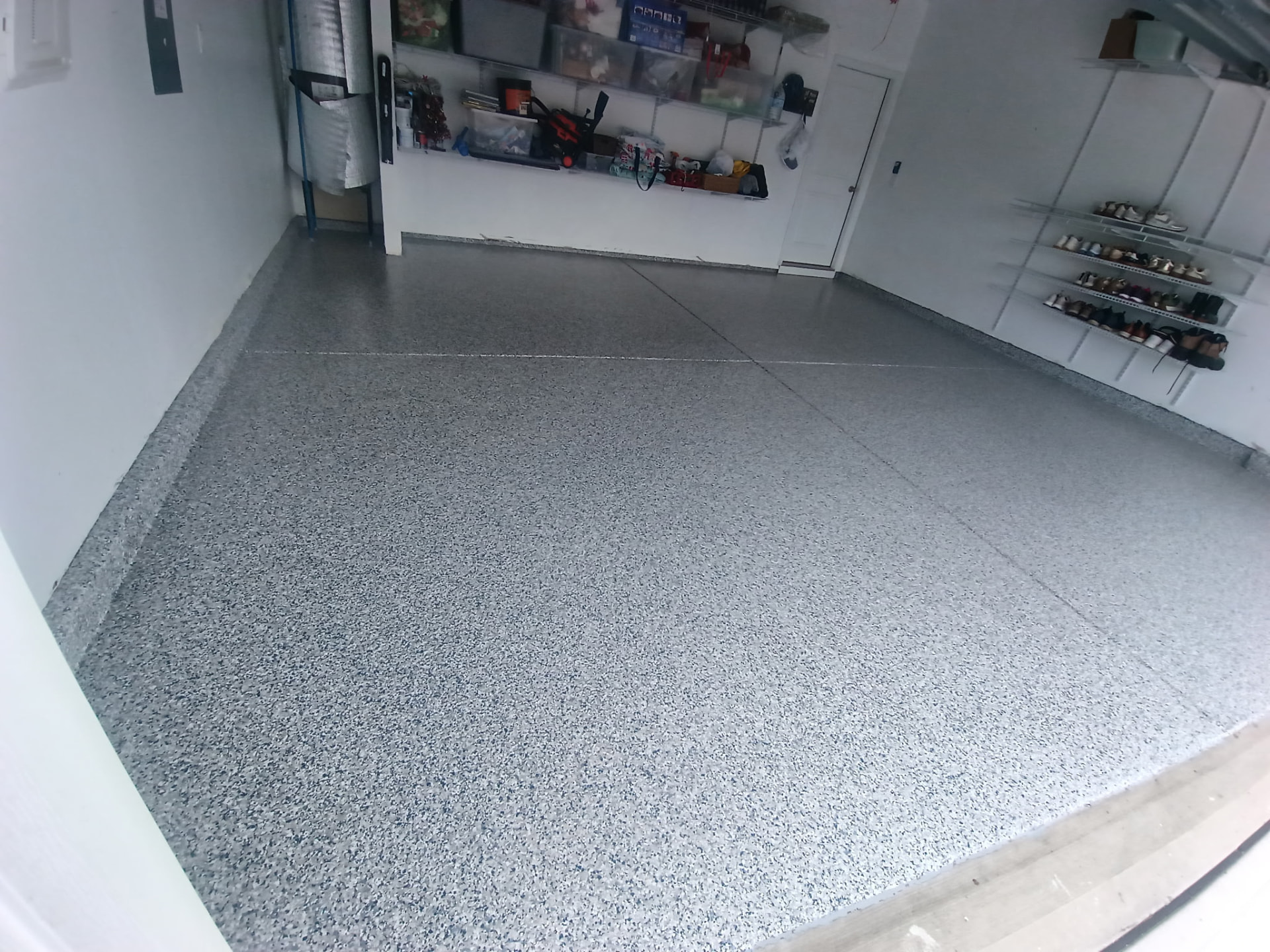
Each material solves one of those problems. A moisture vapor barrier epoxy handles the slab. A polyaspartic top coat handles the sun. That is why the system Phil uses is a moisture vapor barrier epoxy base, color flake and a polyaspartic top coat that will not yellow, all in one price.
How the layers work together
- Base coat. The moisture vapor barrier epoxy soaks into the ground concrete, locks onto it and holds back moisture from below. Everything else depends on this bond.
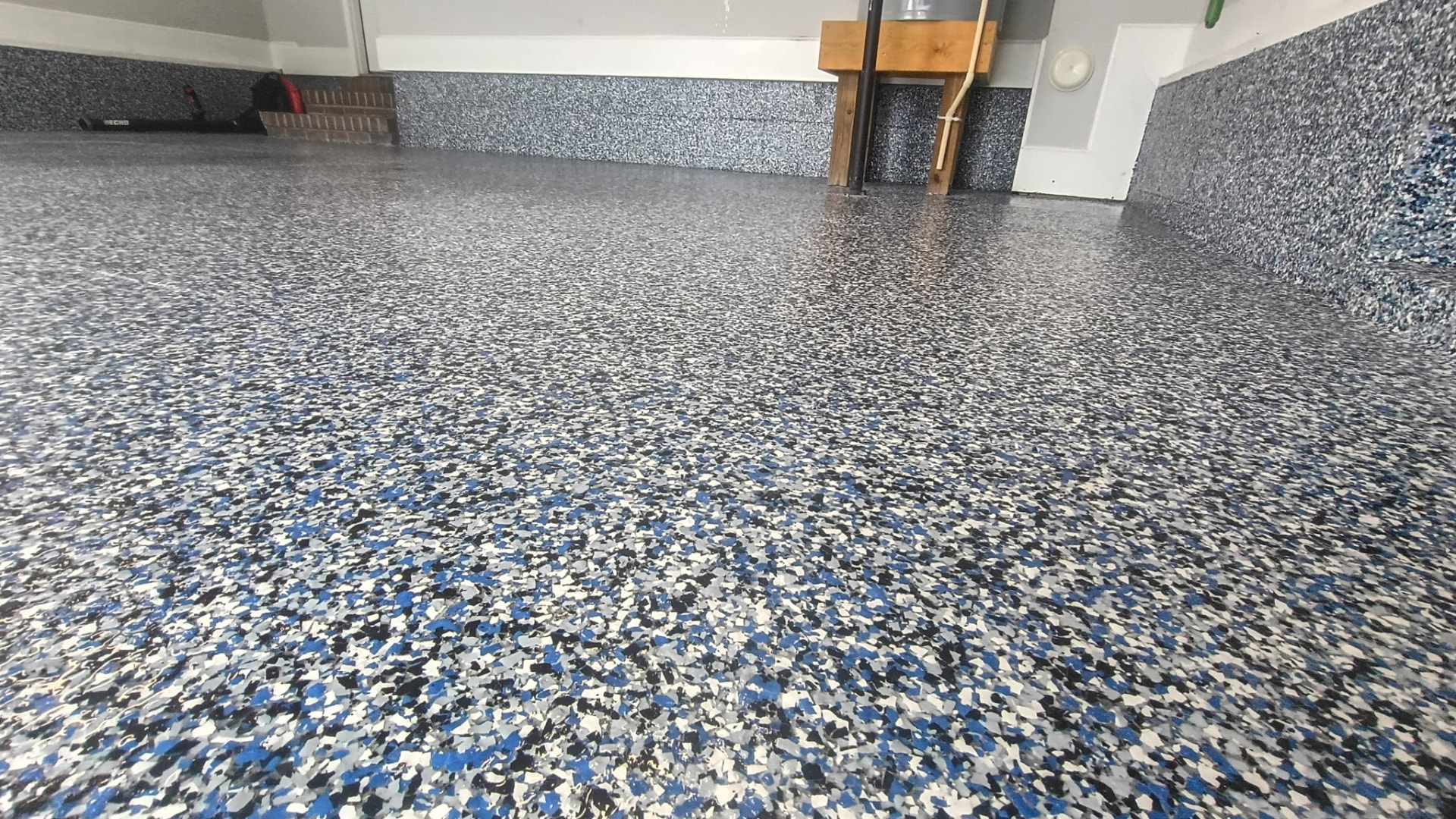
- Flake. Color flake is broadcast into the wet base coat. It gives the floor its color and texture and hides dust and small marks.
- Top coat. The clear polyaspartic seals the flake in and takes the sun, sand and hot tires. See hot tire pickup.
Humidity on install day
Humidity affects both materials. Epoxy cures slowly and can turn cloudy or leave a greasy film if it cures in very damp air. Polyaspartic actually cures faster in humid air, which helps, but that same speed means it has to be mixed and spread quickly by a crew that knows it. Neither one should go down on a slab that is wet with condensation, which happens on muggy spring mornings here.
Get your exact price
Answer three quick questions, pick a time, and get a free on-site estimate. Free and on site with Phil, about 30 minutes, exact price on the spot.
Frequently asked questions
Is polyaspartic the same as polyurea?
Polyaspartic is a type of aliphatic polyurea. In garage floor marketing the two names are often used for the same family of fast curing, UV stable coatings.
Will an epoxy garage floor turn yellow in South Carolina?
Standard epoxy can amber in sunlight, especially near the open door. A UV stable polyaspartic top coat over the epoxy is made to stay clear and protects the layers underneath from the sun.
What is a moisture vapor barrier base coat?
It is an epoxy base designed to stop moisture vapor moving up through the slab from reaching the coating above it. On coastal slabs it is the layer that helps keep the floor from blistering and peeling.
Which is better for a patio or pool deck?
Anything outdoors needs a UV stable top coat, which in practice means polyaspartic on top. See pool deck coating.